'This is our way of life': Kura pushes back on airport's opposition to development
Thu, 15th Oct 2026 (Today)
A Rotorua kura is challenging a decision by its neighbour Rotorua Airport to block plans to expand school buildings and questioning why it is facing barriers to development after decades of operating alongside the airport.
Te Kura Kaupapa Māori o Ruamata has been at the site on Te Ngae Road since its foundation almost 40 years ago, the site sits beneath flight take-off and landing paths.
The kura has 190 students on site, from new entrants to the end of high school and is looking to build a new multi-purpose gymnasium.
As a neighbour, Rotorua Airport is an affected party for the resource consent application, it chose not to provide approval for the proposal.
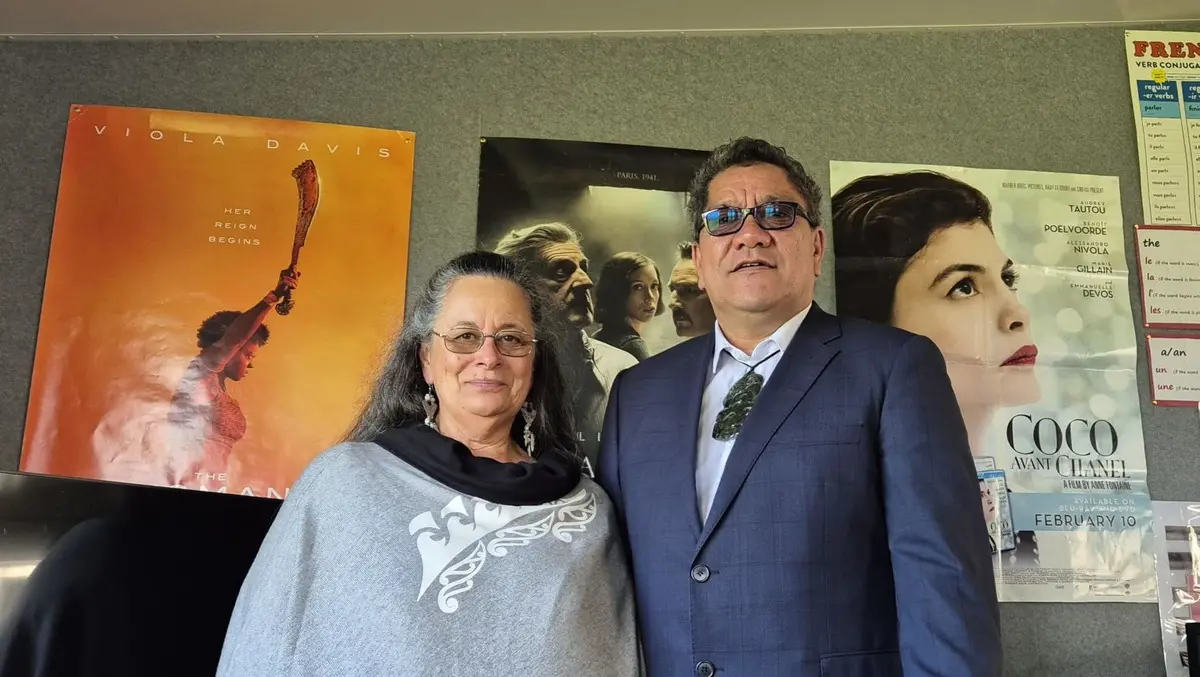
Tumuaki Dr Cathy Dewes (Te Arawa, Ngāti Porou) told RNZ she was extremely surprised by the objection as the kura had operated alongside the airport for decades.
Aircraft-noise insulation measures had been undertaken by the kura and marae in the past, she said.
"We want our kids here. In fact, the parents, when they request to enroll their students here, we go through a very rigorous process whereby they have to assure us that they do want the Te Aho Matua curriculum that we offer and they do want the Ruamata specific unique curriculum that we offer and that their children will speak Māori every minute of every day and they won't speak English except in English class when they're allowed to. And they also have to agree that they're okay with our being sited here next to the airport."
Dewes said all previous reports to date had indicated there was minimal risk to the kura from operating beneath a flight path.
"This is our way of life. We know there's a possibility of risks in the same way as we go out on the main road every day. We make that choice and we live with it."
The airport's objection meant the expansion would go to an independent hearing, the Ministry of Education had also sought independent aeronautical expertise to assist the consenting process.
In the meantime Dewes said the kura would have to do without a gym facility for another year, perhaps even two.
"Kei konei mātou e whakaaro ana, kei te pīrangi rātou kia wehe mātou, kia nuku mātou ki whenua kē atu, engari kāore mātou mō te nuku."
Here we are thinking that perhaps they want us to leave, to move to a different site, but that isn't going to happen.
Rotorua Airport CEO Nicole Brewer said the airport recognised how important the kura was to its tamariki, whānau and the wider community, and that it supported its growth in principle.
"We have legal obligations under Health and Safety and Civil Aviation laws, which include assessing how airport operations could impact the safety of those on the ground.
"We take these obligations extremely seriously, and followed a thorough process to understand the potential risks in the context of the legislation, drawing on the expertise of international aviation regulations and external consultants.
"Our initial safety assessment identified several unresolved safety matters which meant the Airport was unable to provide affected-party approval."
Brewer said that did not mean the airport opposed the development, and being unable to provide affected-party approval was not a reflection on the kura.
"This is a complex situation, and the best way forward will be an independent decision that considers all available information, weighed against the obvious benefits the kura provides to whānau and the community.
A history of the whenua
Long before the airport existed, the whenua at Rotokawa was occupied by Ngāti Uenukukōpako. The land was compulsorily acquired by the Crown and local authorities for the development of the aerodrome in the late 1950s and 1960s.
Dewes said when the whenua was taken to make way for its construction, whānau were displaced, and places of enormous cultural and spiritual significance were lost.
When the community was looking for a site for a Māori language immersion school Dewes was invited by kaumātua Te Hiko-o-te-Rangi Hohepa to set up at his marae Uenukukōpako.
It took up the offer and Te Kura Kaupapa Māori o Ruamata opened in 1987.
"The marae is an essential part of our curriculum here at Te Aho Matua. So, kaupapa Māori, mana Māori, mauri Māori, it's here on the site.
"And the hall, whare hākinakina (gymnasium), will just be providing shelter for all of the normal school activities, plus Māori subjects and learning, essential learning for Te Aho Matua, as well as NCEA examination qualifications, just like every other secondary school in Rotorua enjoys."
Rotorua Mayor Tania Tapsell told RNZ it was important to consider the history of the land.
"The Rotorua Airport itself is on land that was forcibly removed from local hapū Ngati Uenukukōpako in the past, so there are grievances. So personally, as mayor, I'm very sad that this has been seen as a barrier of mana whenua, of tangata whenua, of our tamariki, our next generation, not being able to grow their school on their land. So we are really hoping that we can resolve this as soon as possible."
She said the council wanted to see a positive resolution, both to the airport's safety concerns as well as the need for the kura to grow.
"There is such a long wait list and we want to make sure that anyone who chooses to study at a kura kaupapa, especially at Ruamata, is able to do so. And we do not want council to be seen as a barrier for education and mana whenua aspirations."
Rotorua Airport is fully owned by Rotorua Lakes District Council, but Tapsell said its decision-making was independent.
"What we hope to see is a positive resolution where not only can the airport continue its operations, because I suppose that's a key concern is and why you see many airports around the country have a lot of green space around because we are limited due to health and safety regulations of what can be there. So we want to have a win-win both ways by the end of this."
Assistance from an independent specialist being sought
New Zealand School Property Agency chief executive Gus Gilmore said the agency was working alongside the Ministry of Education through the statutory resource consent process to address the matters raised by the airport.
Assistance from an independent aeronautical specialist would be presented as part of the evidence being preparing for the Rotorua Lakes Council's resource consent hearing, once a hearing date had been set.
"The proposed expansion involves the building of a Whare Tāpere (multi-purpose gymnasium) space, while allowing for the relocation of the existing Whare Hangarau (teaching space) to make room for the new gym. This would provide the kura with their entitled teaching and learning space to support delivery of their curriculum and cultural activities.
"The buildings have been designed with input from an acoustic consultant, and are consistent with the applicable building standards and relevant health and safety requirements."