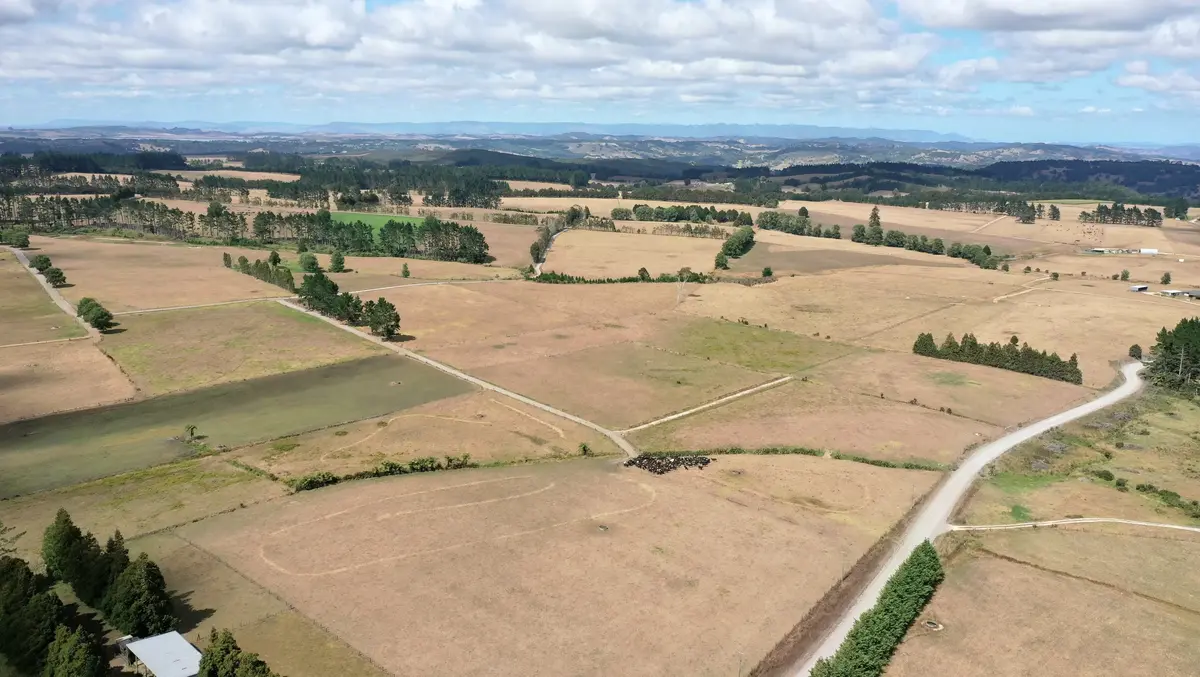
Northland in grip of early-stage drought as powerful El Niño tightens hold
Fri, 6th Nov 2026 (Today)Northland is now in the grip of early-stage drought as one of the strongest El Niño climate patterns on record tightens its hold on the region.
Northland Regional Council (NRC)'s October 2026 climate and hydrology report released on Wednesday (SUBS November 4) has, for the first time this season, confirmed widespread meteorological drought conditions across the North.
The confirmation comes just three weeks after Northland moved into a drought crossroads danger zone.
The report said October had been significantly drier than average across the region, except for isolated eastern coastal areas.
NRC monitoring manager Jason Donaghy said the region received only 36% of its long-term average rainfall in October, or just 32mm of rain.
Northland was drying out with low rainfall, very low river levels and soil moisture well below field capacity, while groundwater received less recharge.
"The effects of the ongoing dry weather are now showing earlier than expected across the wider water system, increasing the risk parts of the region could enter hydrological drought before the end of the year," Donaghy said.
Meteorological drought is the earliest stage of drought and is defined by a prolonged period of abnormally low rainfall, or a rainfall deficit, compared with the long-term climate for a region and the time of year.
As conditions worsen hydrological drought typically follows, marked by a sustained reduction in surface-water or groundwater availability, including low river flows, declining lake and reservoir levels, reduced aquifer recharge, or falling groundwater levels.
Donaghy said continued below-normal rainfall was increasingly likely to bring more frequent dry spells, continued drying of soils and vegetation, and below-normal groundwater recharge, creating challenges for water-reliant sectors.
The latest confirmation marks a significant escalation in Northland's drying trend over spring.
Tai Tokerau received 108% of its average August rainfall before totals plunged to just 52% of normal in September and 36% in October. Over the same period, soil moisture, river flows and groundwater levels have all deteriorated across much of the region.
In August, Northland's soil moisture was generally normal and groundwater had received useful recharge.
At the time, NRC warned a strengthening El Niño climate pattern comparable with a powerful 1997 event was beginning to influence Northland's weather patterns and was likely to bring a drier spring.
By September, with regional rainfall dwindling to about half the long-term average, soil moisture levels had dropped below field capacity and the council warned there was a moderate risk of drought developing within three months.
Tai Tokerau's lowest October rainfall was recorded at Cape Reinga in the Far North, which received just 5.6mm of rain, or 11% of its normal monthly rainfall.
Groundwater levels are currently low in Taipa, Mangōnui, Kaikohe, western Whangārei, Ruawai and Mangawhai.
River flows in October ranged from below normal to extremely low across much of Northland, with the only exception a handful of spring-fed streams east of Whangārei maintaining more typical flows.
Soil moisture levels are also well below normal, with most NRC monitoring sites below field capacity and continuing to dry out.
Field capacity is the soil's fully topped-up moisture level after rain, providing the stored water that pasture and other plants rely on for growth.
Donaghy said October results from Standardised Precipitation Index (SPI) analysis, which measures rainfall deficits over time, showed dry conditions extending from the mid-North south through Whangārei and across the Bream Bay and Kaipara areas.
The SPI is an internationally recognised tool used to measure rainfall deficits against long-term averages and identify drought conditions.
Almost three-quarters of Northland's NRC monitoring sites (17 of 23) recorded moderate-to-extreme rainfall deficiencies over the three months to the end of October.
The deficit was more pronounced over the longer six-month period from May to October, with 87% of the monitoring sites (20 of 23) classified as moderately to extremely dry, including 57% (13 sites) rated as extremely dry.
The MetService has forecast some rain and possible thunderstorms for early November, but drier weather is expected to return later in the month.
Donaghy said Earth Science New Zealand's climate outlook for November to January indicated rainfall, river flows and soil moisture were most likely to be below normal through January, while temperatures were expected to be above average.
El Niño is forecast to peak in late spring or early summer and could rank among the strongest events on record.
How to prepare:
NRC is urging households, farmers and businesses to monitor water supplies, plan ahead and take steps to conserve water as the region heads into what could be a challenging summer.
The regional council is encouraging homeowners to know how long their water supplies are likely to last, have contingency plans if supplies fail, monitor tank levels closely, book refills early, check for leaks, maximise rainwater collection and reduce water use through measures such as shorter showers and running full washing machine and dishwasher loads.
For farmers and horticultural growers, the council recommends incorporating drought into business, feed and water-supply planning, closely monitoring feed and water availability, identifying alternative sources early, checking infrastructure for leaks and making early decisions around stock numbers, feed requirements and animal welfare.
For resource consent holders authorised to take water, NRC says they should ensure they understand and comply with consent conditions, monitor water use, check reticulation systems for leaks or faults and regularly monitor council drought information as dry conditions continue.
Three districts, three drought stories:
Far North district
The Far North now features some of Northland's strongest drought indicators. Cape Reinga recorded the region's lowest October rainfall total with just 5.6mm of rain, while groundwater levels are low around Taipā and Mangōnui and Kaikohe.
Whangārei district
Whangārei sits at the centre of the region's drought footprint. Marsden Point was Northland's driest monitored location during September after having been one of the wetter sites in August, illustrating the speed of the region's drying trend. Groundwater levels are low in western Whangārei, while river flows remain below normal across much of the district.
Kaipara district
Kaipara remains one of Northland's districts most exposed to prolonged dry weather. Dargaville was Northland's driest monitored location in August, while the broader Kaipara area features prominently in NRC's latest analysis. Groundwater concerns persist around Ruawai and the district remains highly exposed to any prolonged period of dry summer weather.