Flooding, slips and power cuts: Wellington emergency agencies test storm response
Thu, 26th Nov 2026 (Today)Picture this: Wellington is under a weather-related regional state of emergency and Lower Hutt is severely disrupted.
Flooding and debris shut down roads to Seaview and the Eastern Bays, 175 people are in temporary shelter, 7400 people don't have power and slips are blocking parts of the road to Wainuiomata.
Fortunately, it's all on paper.
It is the hypothetical scenario behind a region-wide civil defence exercise on Wednesday across local councils, Wellington Region Emergency Management Office (WREMO), the police, Fire and Emergency (FENZ), local New Zealand Response Teams and other organisations.
The exercise replicated what could happen after a tropical cyclone tore through the lower North Island, to build officials' confidence and give them a chance to practise making calls in an unpredictable environment.
"What we're trying to do now is work out how has it impacted us, how has it impacted the region: things like roads, displaced personnel, damaged buildings," said controller Howie Duffy.
"We really need to get a good handle on that so we can prioritise the resources that we've got."
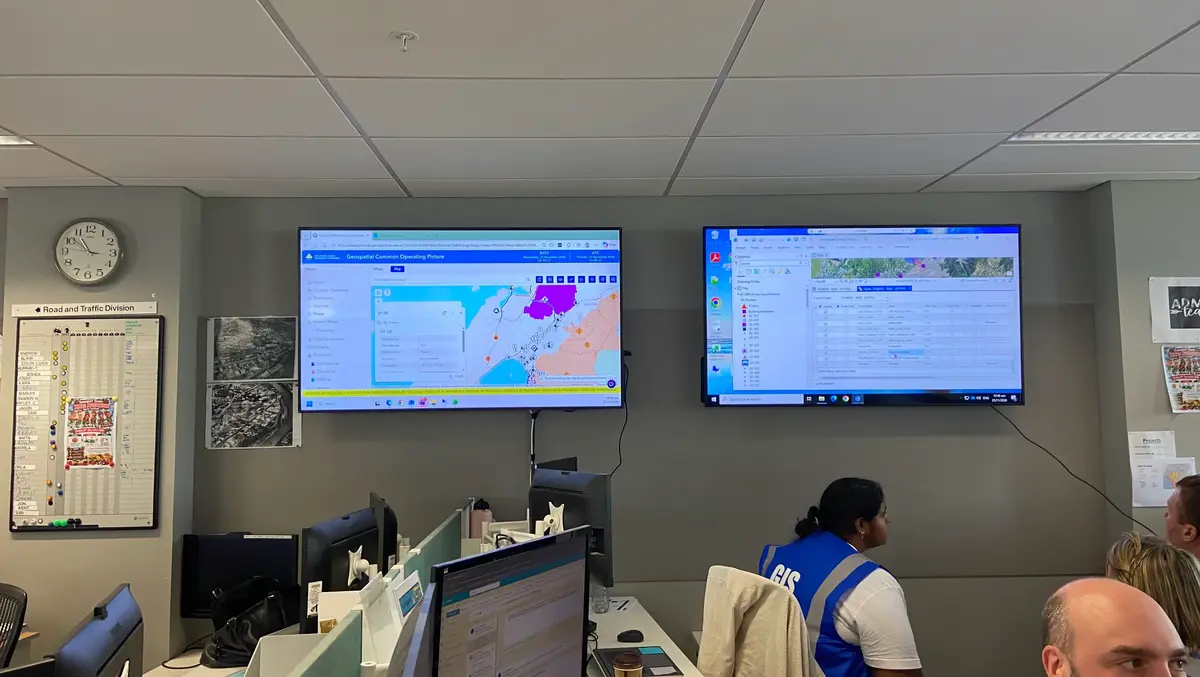
Inside the Hutt City Council offices, where Lower Hutt's Emergency Operations Centre (EOC) is located, about 60 people in coloured vests – representing different sections and responsibilities – are hunched over their laptops and phones or are talking in a flurry of activity.
During the emergency, the EOC gathers and verify information from multiple sources before relaying it to the public.
Some officials handle public information, others co-ordinate how to get supplies to emergency assistance centres and some try to figure out the extent of the storm damage and long-term rebuilding. The senior officials dip in and out of briefings with their counterparts to understand the bigger picture.
All of them have regular council jobs with civil defence training, meaning they can jump into these roles at a moment's notice.
The exercise deals with details: officials even fielded and responded to a simulated media query asking about silt presence at a certain location.
Regional exercises like this are run twice a year but council officials get training inbetween through field activities or exercises led by emergency services or National Emergency Management Agency (NEMA).
Anthony Robinson, the exercise controller, said the state of emergency declaration from April fed into the exercise and it was focused contingency planning for things that might happen.
What was practised in the exercise could be replicated to respond to other natural disasters like earthquakes and tsunami, Robinson said.
"The consequences are very similar across different types of emergencies, and that's what we're practising now: the consequence management, and then transition into recovery."