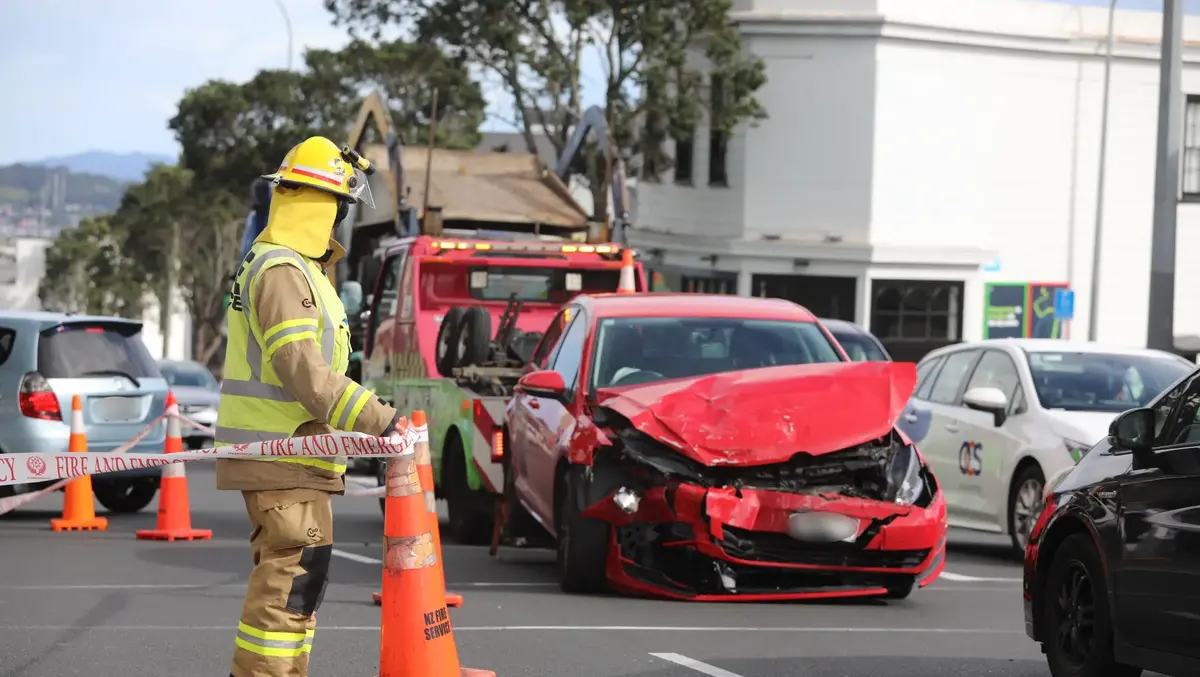
New Zealanders are making more insurance claims - but not as many for collisions, and we may have technology to thank.
Insurer AMI has released its latest Motor Report, which shows there were 242,300 motor claims lodged between September 1 and August 31, up 3 percent on a year earlier.
But AMI MotorHub executive general manager Dean MacGregor said while there was an increase in weather-related claims, windscreen damage and claims involving damaged keys and locks, collisions were 12 percent below their 2023 peak.
"We are seeing claims up overall a little bit, but we see a reduction in collision claims themselves, and that's coming off the peak of 2023 when everybody had some built up need to get on the road after Covid.
"Where we are seeing some increases, is windscreens, we've had a bit of a stormy sort of year, so we've seen some weather-related claims in keys and locks, but actually collision claims are reducing, and we think that we're starting to see some impact of the technology through the advanced driver assistance systems, known as ADAS, really starting to have some positive impact there."
Confidence in ADAS continued to grow, he said, with the proportion of motorists expecting these systems in their next vehicle rising from 34 percent in 2025 to 65 percent in 2026.
"The growing popularity of ADAS and the continued decline in collision claims really shows the important role these systems play in improving road safety."
In Australia, research showed 20 percent of road casualties could be prevented through the systems but New Zealand lagged Australia's use. In Australia, 74 percent used ADAS often or always whereas only 40 percent of New Zealand drivers did so.
Collisions between 6am and 10am were down 2.9 percent and between 2pm and 6pm down 2.6 percent. Overnight collisions were down 3.9 percent.
The streets in New Zealand with the most collisions were:
- Great South Road in Auckland
- Great North Road in in Auckland
- Auckland CBD
- Riccarton Road in Christchurch
- Ti Rakau Drive in Auckland
- Dominion Road in Auckland
- Manukau Road in Auckland
- Lincoln Road in Auckland
- Moorhouse Avenue in Christchurch
- Don McKinnon Drive in Auckland.
"We're seeing Auckland as the predominant area where most of those accidents occur, and that's our largest city and the most congested. But Christchurch is appearing. We've got Riccarton Road coming in at number four, and Moorhouse Avenue at number nine in that top 10.
"So we're seeing a little bit of movement, but we're still continuing to see Auckland as the area of the greatest number of collision accidents," MacGregor said.

Switching to an EV is being considered by many Kiwis.
AFP
He said increasing use of ADAS should help the numbers to continue to drop over time.
"And certainly reduce the severity of those events because things like autonomous emergency braking or lane keep assist really support a driver being able to highlight those hazards that might be around them.
"There's nothing like also just being very mindful and attuned to what's happening when you're driving, but those systems really do help to keep drivers safe too."
He said it was clear that higher fuel prices were pushing people to think about EVs and hybrids. The number of EVs insured increased 16 percent between March and August.
"In fact, half of our customers are saying that they would seriously consider switching to an EV or a hybrid for their next vehicle."