

Meth use is 'massive' across the nation and in the workplace
Sun, 21st Jun 2026First-quarter wastewater testing, covering almost 80 percent of New Zealanders, shows declines in cocaine consumption and increases in consumption of methamphetamine and MDMA. The police generated report confirms The Drug Detection Agency (TDDA) Imperans Report data from inside New Zealand workplaces. "Our Q1 2026 data shows amphetamine type substance detections, which include methamphetamine, remain a massive issue, says Chief Executive Glenn Dobson.
The police generated wastewater drugs test includes fentanyl, and heroin but the focus is on methamphetamine, MDMA and cocaine as these drugs are routinely detected by the programme.
Methamphetamine use alone across New Zealand sample sites in Q1 2026 equates to an estimated weekly social harm cost of $38.4 million says the report. This is derived from the New Zealand Illicit Drug Harm Index 2023 which provides a conservative measure of the harms associated with the use of illicit drugs in New Zealand and considers both personal and community harms.
"Both data sets send a clear signal," says TDDA's Dobson. "Methamphetamine is affecting communities and companies. The regional picture is the most concerning, with Gisborne recording a 240.1 percent increase in detections and Bay of Plenty up 27.5 percent year-on-year.
"The advice is simple for employers in safety-critical industries - have the policy, a testing programme and train management to catch it before it becomes an incident," says Dobson.
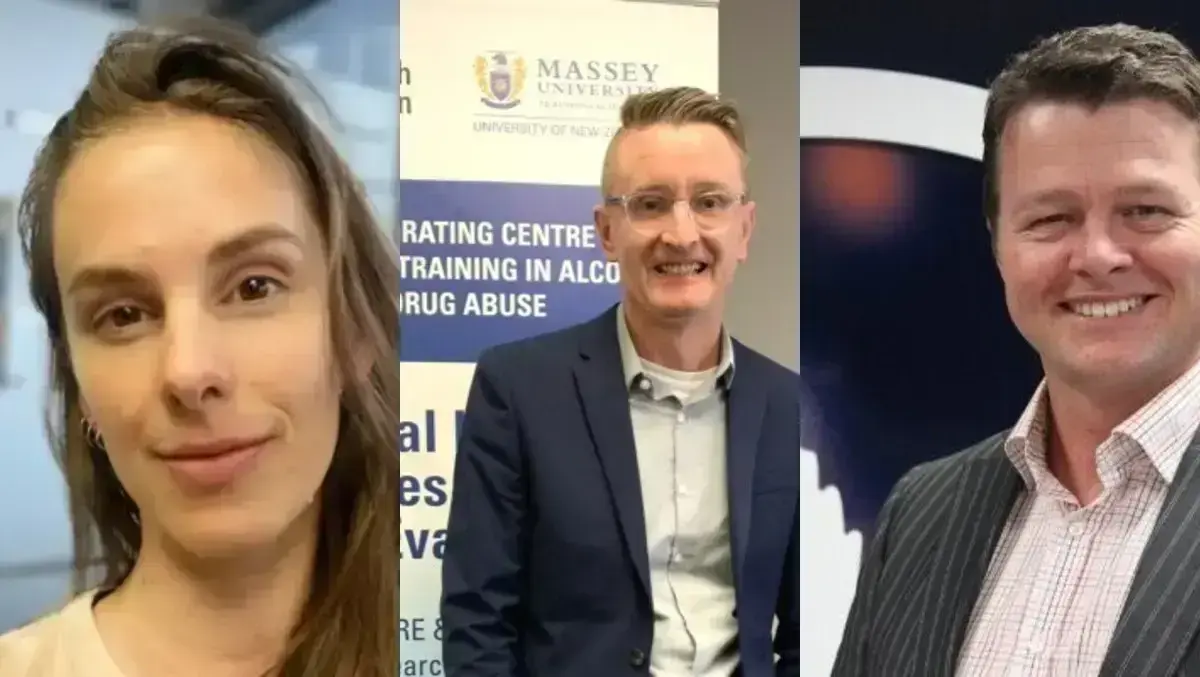
The SHORE & Whariki Drug Research team * out of Massey University endorses the warning. "Concerningly, methamphetamine use continues to break records with a weekly national consumption of 36.6kg reported during Q1 2026," the team says.
"It follows a trend where "large increases in methamphetamine consumption have also been recorded in Australia since 2023, with annual national total consumption increasing from 9,018kg in 2021/2022 to 15,791kg in 2024/2025 (+75 percent).".
"New Zealand Drug Trends (NZDTS) data shows that methamphetamine users have increased the amount of the drug they consume, with weekly or more frequent methamphetamine use increasing from 27 percent in 2018/19 to 57 percent in 2025.
According to the SHORE & Whariki team, NZDTS has found an increasing trend to purchase drugs from digital drug markets (darknets, social media) including MDMA (from 13 percent in 2020 to 21 percent in 2025) and cocaine (four percent to 14 percent).
"There have also been significant price declines for methamphetamine in New Zealand, with a gram of meth declining from $563 in 2017/18 to $334 in 2025 (-41 percent, an inflation adjusted decline of -55 percent)," the team says.
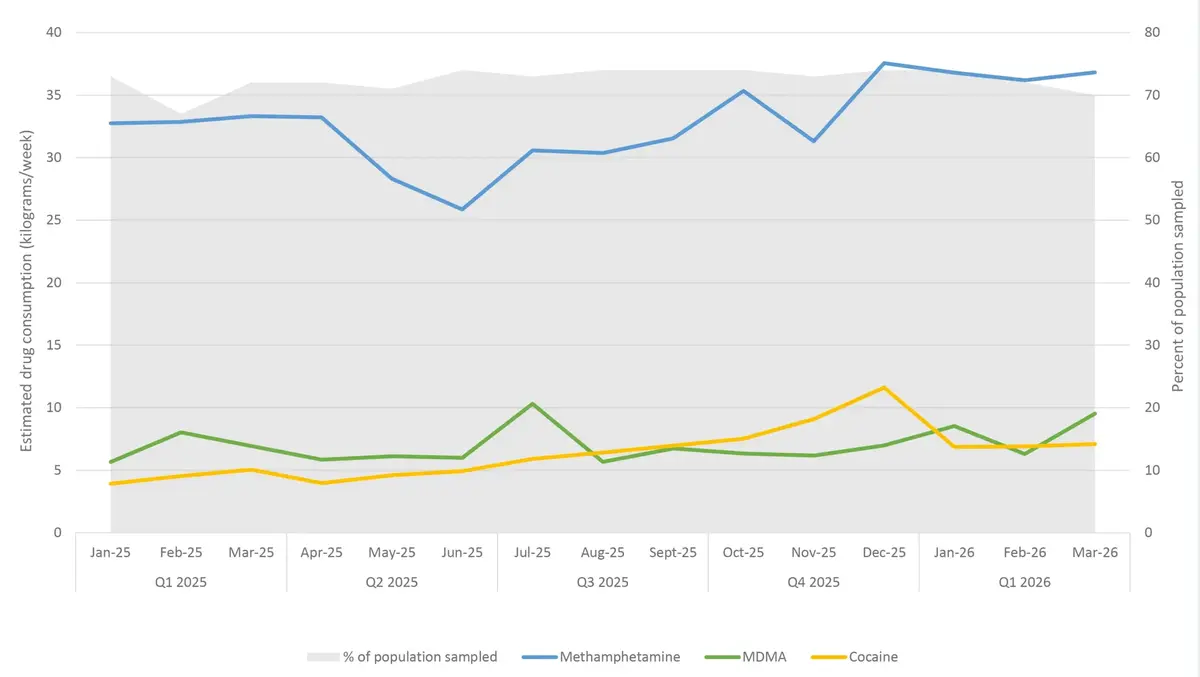
"NZDTS data shows that cocaine use remains fairly infrequent. "This may suggest that high cocaine use detected in Q4 2025 reflects more people using it, rather than increased frequency of use among established users, which also accounts for increased consumption across regions," the team says.
Wastewater testing results for MDMA show a greater level of stability in consumption since early 2023. Associate Professor Fiona Hutton, Institute of Criminology, Victoria University of Wellington says that "knee-jerk and moral panic type responses should be avoided."
"Wastewater testing provides an interesting snapshot of the use of some drugs in Aotearoa, New Zealand. The latest figures represent a snapshot in time.
"As the period of testing covers the summer/festival period it is perhaps to be expected that higher levels of drugs like MDMA were detected, and that cocaine use, although it has decreased, remains higher than previous quarters.
"The decrease in cocaine use is a positive trend, and it will be useful to note in the coming months to see if this trend continues.
"It is expected that drug consumption will fluctuate as different drugs fall in and out of favour with consumer groups. MDMA use, for example, has increased in some districts, but not in others, while cocaine use has risen in some districts and not in others," she says.
"Local contexts are important to bear in mind when interpreting large data sets like wastewater testing. Wastewater testing can only tell us so much -_ it cannot tell us what kind of drug use it is measuring, for example addiction, problematic use or occasional recreational use.
"It is also important to note that prevalence of cocaine use is low overall - in 2022/23, 1.3 percent of the adult population was estimated to use this particular drug at least once in the past year, rising from 0.6 percent in 2017/18 (New Zealand Drug Foundation, 2023).
More recent figures from the 2025 NZDTS numbers note that 23 percent of participants reported using cocaine in the past six months, compared to 11 percent for methamphetamine, 81 percent for alcohol and 69 percent for cannabis.
"In monitoring drug trends such as these the focus should be on how to reduce harm from substances like cocaine and methamphetamine and reporting should be accompanied by links to good, balanced information," says Professor Hutton.
Support
The Level Drug Information on cocaine, on methamphetamine as well as information on where people can get their drugs checked. Safer Drug Laws for Aotearoa NZ provides a template for reform
* Professor Chris Wilkins, Associate Professor Marta Rychert & Dr Robin van der Sanden make up the SHORE & Whariki Drug Research Team.
The most commonly used drugs in recreation and the workplace
Methamphetamine
- Methamphetamine use across sample sites remained elevated and was stable during Q1 2026, averaging an estimated 36.6 kilograms per week. This was 15 percent (or 4.7 kilograms) above the average quantity consumed over the previous four quarters.
- Most districts recorded above average methamphetamine use.
- Methamphetamine use across sample sites in Q1 2026 equates to an estimated weekly social harm cost of $38.4 million.
Methylenedioxymethamphetamine (MDMA)
- MDMA use increased in Q1 2026, averaging an estimated8.1 kilograms per week. This was 21 percent (or 1.4 kilograms) above the average quantity consumed over the previous four quarters.
- Only Tāmaki Makaurau and Canterbury District recorded a notable increase in MDMA use when compared with their average consumption over the previous four quarters.
- MDMA use across sample sites in Q1 2026 equates to an estimated weekly social harm cost of $1.7 million.
Cocaine
- Following the exceptionally high cocaine use recorded in Q4 2025 averaging 9.4 kilograms per week, cocaine use decreased in Q1 2026 averaging an estimated 7.0 kilograms per week. This was 12 percent (or 0.7 kilograms) above the average quantity consumed over the previous four quarters.
- Most districts recorded above average cocaine use.
- Cocaine use across sample sites in Q1 2026 equates to an estimated weekly social harm cost of $2.6 million.
Source: NZ Police report - New Zealand Drugs in Wastewater Programme Overview. Quarter One: January– March 2026