

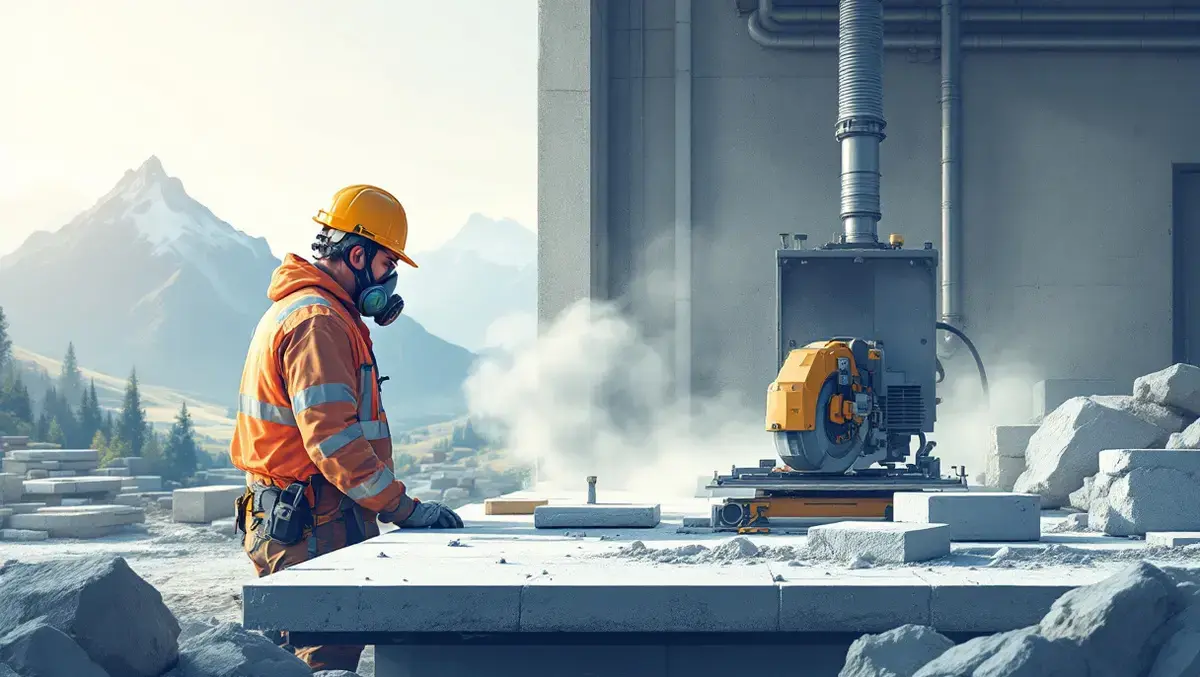
No excuses – employers must by law protect workers from silica dust
Sun, 26th Jul 2026Silica dust is a work health and safety hazard. It is produced when materials or products containing silica such as stone, bricks, concrete or tiles are cut, drilled, polished or ground. Silica dust particles can be so small they can lodge deep in the lungs and cause permanent damage, including serious and fatal diseases such as silicosis and lung cancer.
Examples of personal protective equipment.
Image credit: safework australia
Workers in industries such as construction, manufacturing, tunnelling, demolition, mining, quarrying and stonemasonry can be exposed to silica dust at work.
Employers have a legal duty to protect workers by managing the health and safety risks from silica dust.
Workers also have a legal duty to take reasonable care of their own, and others, health and safety at work.
Make your workplace silica smart
The Safe Work Australia efforts in this area far outstrip our meagre efforts in New Zealand and offer a solid benchmark for procedures. They are available in multiple languages
Here are some specific Australian mandated, and New Zealand enforceable, health and safety regulations which apply to working with materials containing one percent or more crystalline silica.
The Model Code of Practice: managing risks of respirable crystalline silica in the workplace provides guidance to help employers understand and meet these requirements and protect workers and others in the workplace.
Safe Work’s Be Silica Smart web page offers a range of practical resources, including fact sheets, guides and posters to help employers and workers better understand and manage silica dust risks. It contains targeted advice in special chapters for workers, employers and consumers.
The Asbestos and Silica Safety and Eradication Agency provides national information on silica safety.