

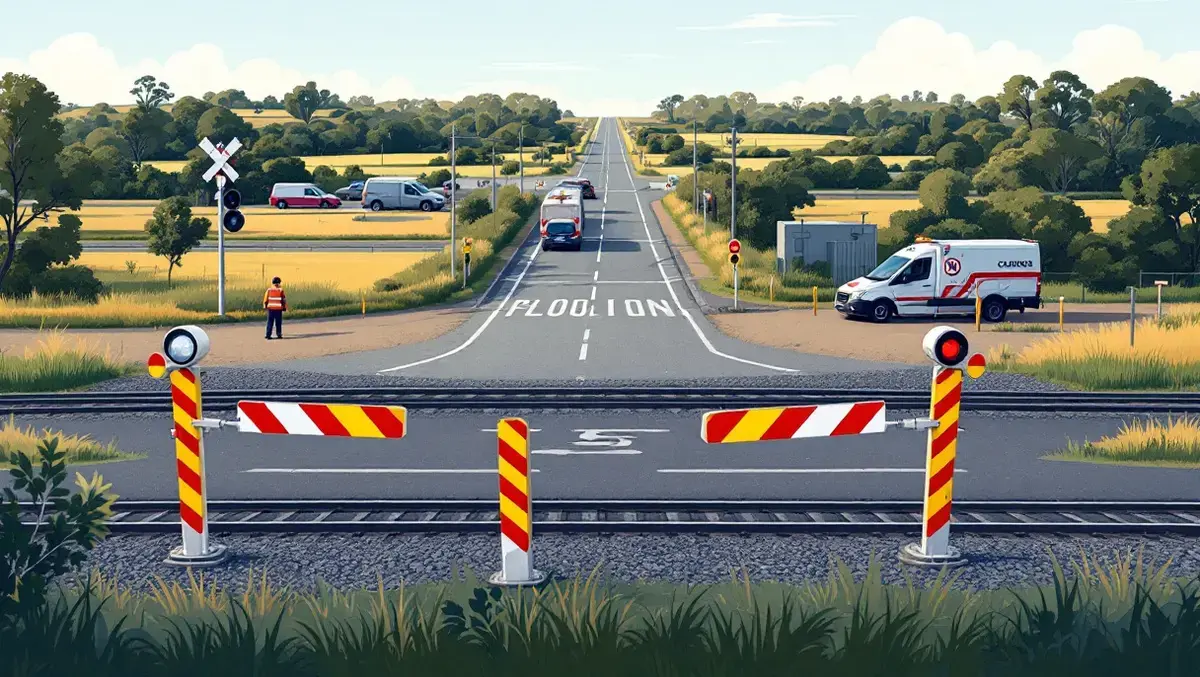
Rail Safety Week begins with crossing safety campaign
Thu, 13th Aug 2026
Rail Safety Week has begun across Australia, with more than 150 organisations taking part in the annual campaign, now in its 21st year.
The initiative brings together rail operators, law enforcement, government bodies and community groups to promote safe behaviour on and around rail corridors. This week will also see the launch of a new national crossing safety campaign from the TrackSAFE Foundation carrying the message: When Roads Cross Rail. Follow the Signs.
Australia has about 33,000km of rail track and more than 20,000 railway crossings, highlighting the scale of the network covered by the campaign. The messaging targets drivers, cyclists and pedestrians, with a focus on stopping at flashing red lights and boom gates, avoiding queuing over tracks, and obeying Give Way and Stop signs.
Official figures cited by organisers show railway crossings remain a persistent source of risk. In 2025, five fatalities, 17 injuries and 893 near hits at railway crossings were reported to the national rail regulator, compared with four fatalities, 21 injuries and 870 near hits in 2024.
The figures show a slight rise in deaths and near misses from one year to the next, even as injuries fell. The campaign also highlights the broader effect of crossing incidents on train drivers, rail staff, emergency responders and transport services.
Memorial service
A memorial service is due to be held at the Australian Railway Monument in Werris Creek, hosted by the TrackSAFE Foundation and NSW TrainLink. The site, regarded as New South Wales' first railway town, honours rail workers who lost their lives throughout Australia's railway history.
Representatives from the rail industry, government, unions, families and local communities are expected to attend. NSW Minister for Regional Transport and Roads Jenny Aitchison is also set to join the service.
Rail Safety Week is also being marked in New Zealand, the Australasian Railway Association said, with rail organisations running a range of events and initiatives during the week.
"The rail industry will be out in force this week, highlighting the importance of keeping both rail workers and community members safe on and around the rail network," said Caroline Wilkie, Chief Executive Officer of the Australasian Railway Association.
"This is a great reminder for all of us to be aware of our surroundings, follow the signs and help each other stay rail safe every day of the year."
The Australasian Railway Association represents more than 240 member organisations across Australia and New Zealand. TrackSAFE, which is backed by the rail industry, focuses on reducing deaths and injuries on the rail network and on trauma management for rail workers.
Human toll
Campaign organisers say crossing collisions and near collisions do more than disrupt train services and road traffic. They also leave lasting effects on rail employees involved in incidents and on first responders called to the scene.
"Any death or injury on the rail network is devastating - not just for the family and friends impacted but also for rail workers involved in the incident and the first responders called upon in the rescue effort," said Heather Neil, Executive Director of the TrackSAFE Foundation.
"Fatalities, incidents and near hits on the network can cause severe and lasting trauma to the rail employees involved, and most of these incidents can be avoided. We urge all road users to always follow the signs when roads cross rail," Neil said.
The emphasis on road-rail crossings reflects the fact that these interfaces are among the most visible points of contact between the public and the rail system. In practical terms, the campaign is concentrating on compliance with existing warning systems and road rules rather than introducing new regulations.
That approach relies on repeated public reminders at a time when near-hit figures remain high. With 893 near hits recorded at crossings in 2025, the data suggests dangerous interactions at these sites continue to occur far more frequently than the smaller number of fatal and injury cases alone would indicate.