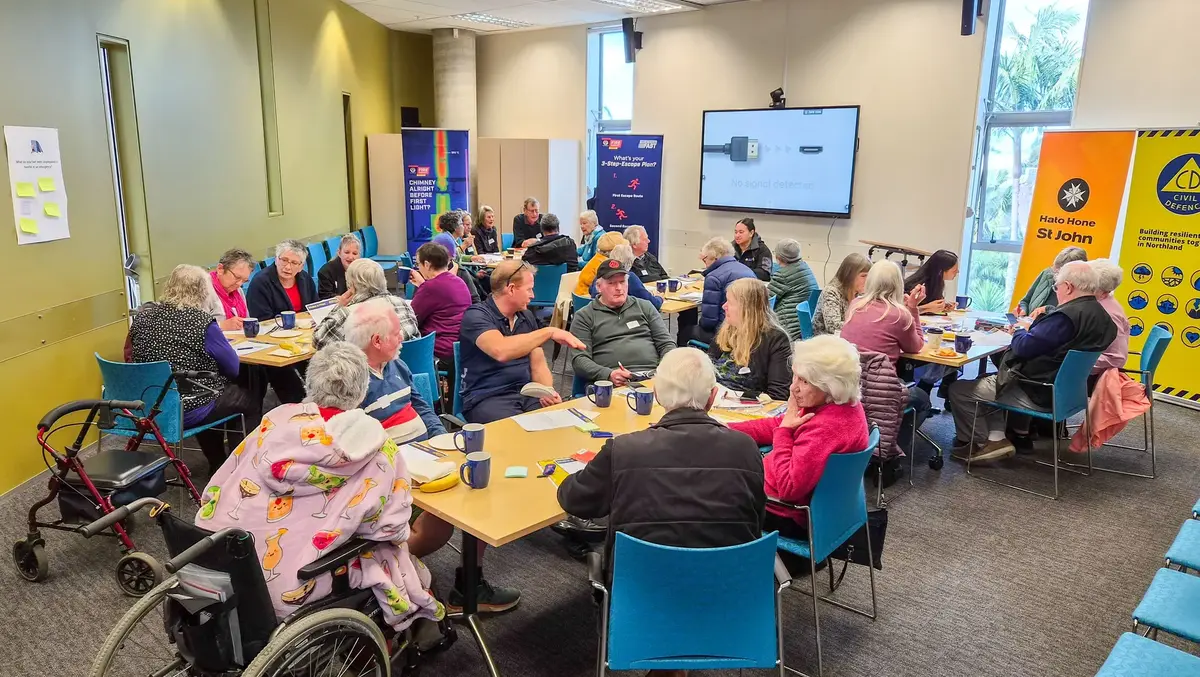
Northland emergency workshop equips older people with practical advice
Wed, 9th Sep 2026
Northland's first joint community emergency preparedness workshop aimed at older people has proved popular, with attendees learning practical steps to improve resilience and readiness.
The two-hour workshop, held at Whangārei central library in late July, was organised by Whangārei District Council (WDC) and involved Northland Civil Defence, Fire and Emergency New Zealand and Hato Hone St John.
Workshop attendee Onerahi's Robin (SUBS: correct) Lieffering (QSM) (85), said she had begun putting lessons into practice, including preparing an emergency plan with close neighbours and assembling a grab bag containing essential items in case she needed to leave home quickly.
The "small steps towards building resilience" workshop attracted nearly 30 people, with a second workshop scheduled for this weekend (SUBS: September 11) and potentially another before the end of the year.
Lieffering, a former council positive ageing advisory group chair and WDC councillor said the workshop helped older people be safer and better prepared for an emergency.
"Older people are among the most vulnerable groups in our community. It's important to consider their needs.
"They are more likely to have accidents in the home, and falls. They may not be driving. Some may be losing their sight and physical abilities."
She said the workshop recognised the valuable life experience older people could bring to emergency situations while emphasising the importance of community connections.
"With all the uncertainty happening around us, building confidence in your own preparedness is a key focus for many people these days," Lieffering said.
"For older adults, there is a balance in adjusting to the pace of ageing while also finding opportunities to share the great wisdom life experience has given us."
Practical lessons included keeping vital health and contact information in an easily accessible place, such as on the front of the kitchen fridge.
Other advice included having smoke alarms in each bedroom and living area, rather than relying solely on one in the kitchen.
Lieffering is featuring in a new council podcast now being produced following the workshop, interviewing representatives from the event's participating emergency organisations to create a resource other older people can access.
One in five of Whangārei district's population was aged 65 or older, and was forecast to rise to almost a third (30%) in the future, she said.
Lieffering said the initiative was part of WDC's Age Friendly Whangārei programme, which is based on the World Health Organisation's age-friendly communities model.
WDC community development adviser Nicole Stanton said the workshop's goal was to help older adults understand the small practical steps that build resilience and improve emergency preparedness.
"The workshop recognised older adults bring valuable life experience, practical knowledge and problem-solving skills to emergency situations," Stanton said.
"It also highlighted that preparedness is not only about having supplies and plans, but also about confidence, connections and understanding your own circumstances and support networks."
A self-assessment exercise helped participants reflect on their level of emergency preparedness and resilience.
Most described themselves as somewhat resilient and somewhat prepared, while identifying areas where they felt confident and where they wanted more support.
Participants highlighted the importance of staying calm, taking time to breathe and drawing on support from neighbours and local communities during emergencies.
"In an emergency, it is often neighbours, whānau and local communities who look after each other until emergency services and help arrives," Stanton said.
Resilience tips from participants included:
• keeping BBQ gas bottles full • having LED lights and a solar-powered lamp available • storing fold-down buckets • keeping water-purification tablets on hand • getting to know neighbours • preparing a grab bag and putting it by the exit door • maintaining at least three days' worth of household emergency supplies • keeping medical supplies in the car • storing copies of important documents in a fireproof container.