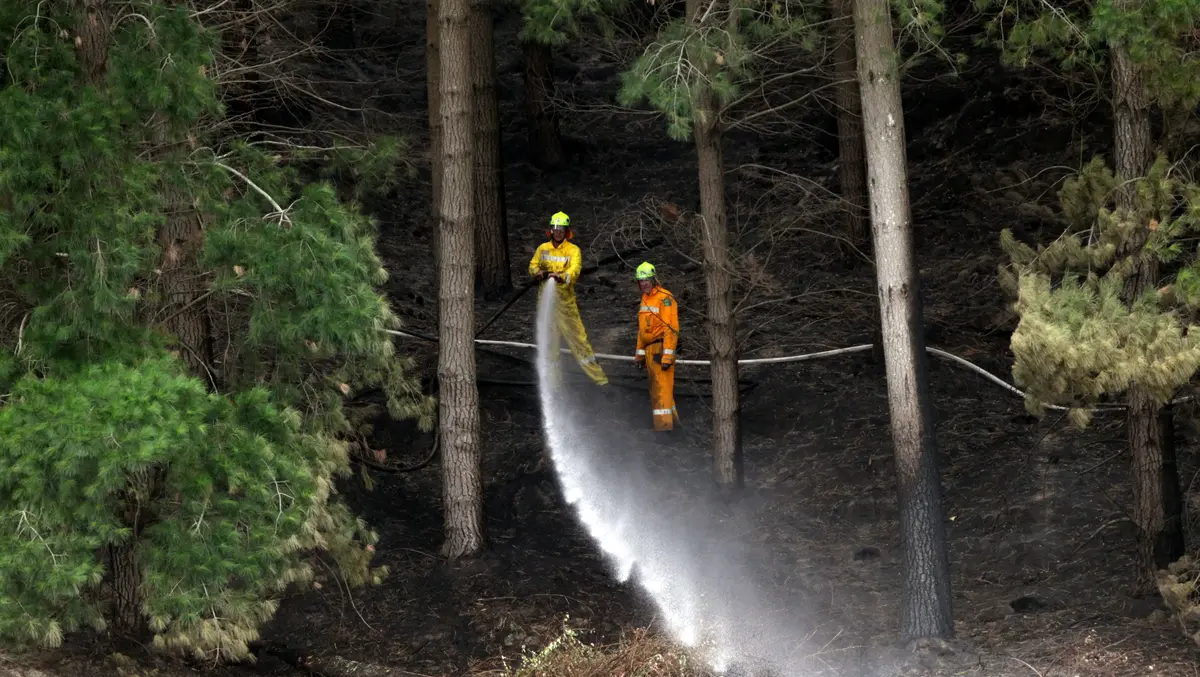
El Niño could raise wildfire and water-quality risks in Hawke's Bay, council says
Fri, 2nd Oct 2026
Hawke's Bay is bracing for the possible environmental impacts of El Niño, including fish deaths, algal blooms, wildfires and poor water quality.
Regional councillors were briefed on Wednesday on the potential effects, with Integrated Catchment Manager Richard Wakelin discussing HBRC's role if the region went into "extreme dry" conditions.
El Niño is a natural climate pattern that causes surface water in the central and eastern Pacific Ocean to become much warmer than usual.
The October-November forecast released on Thursday by Earth Sciences New Zealand says "very strong El Niño conditions" are present in the tropical Pacific and are expected to strengthen further.
"El Niño's influence on New Zealand's weather patterns is becoming increasingly apparent and is expected to be a dominant driver of climate patterns during the outlook period."
For Hawke's Bay, the outlook predicts temperatures most likely to be above average (50% chance), with potential for notable short-duration warm spells associated with strong, gusty westerly winds.
"Rainfall totals are most likely to be below normal (55% chance) over the outlook period as a whole and soil moisture levels and river flows are about equally likely to be below normal (45% chance) or near normal (40% chance)."
Wakelin said Hawke's Bay Regional Council (HBRC) was not the primary responder.
But he said the council's role was to monitor environmental conditions and forecast information, river flows, groundwater levels, soil moisture and ecological conditions.
El Niño conditions can cause low river flows and high water temperatures, leading to increased algae and cyanobacteria growth and lower dissolved oxygen levels.
Wakelin said it was important to share clear scientific information and advice with the community and partner agencies and that they would implement restrictions, including water take restrictions, where required.
HBRC would work alongside agencies such as DoC, Fish and Game, Health NZ, iwi, hapū and emergency partners.
Chair Sophie Siers said that while El Niño accounted for about 25% of the influences that shaped Hawke's Bay's weather, current forecasts suggested it could be a significant event for eastern New Zealand.
"One of HBRC's key responsibilities is understanding the science behind these climate patterns and helping Hawke's Bay prepare for the possible impacts."
She said council teams were monitoring forecasts and environmental conditions while working alongside Hawke's Bay Civil Defence Emergency Management and other partner agencies to share information and co-ordinate planning.
"Whether it's water resources, fire risk, land management or the health of our rivers and ecosystems, our role is to ensure decisions are informed by the best available science and that communities have the information they need as conditions evolve."
Hawke's Bay has felt the effects of El Niño before.
In 1972-73, 1982-83, 1997-98 and 2015-16, El Niño conditions resulted in drought or very dry conditions in Hawke's Bay.
HBRC's agenda says forecasts indicate the current event will be stronger than those events and likely to extend into next autumn.
Deputy chair Jerf van Beek said if this year's El Niño was as bad as it sounded, it would have a serious effect on our population "especially our farming community".
"In 1972-1973 we didn't have as much irrigation along the Heretaunga Plains, but we are now far better equipped at dealing with that and I believe there is plenty of water there."