Westpac to factor natural hazard risk into mortgage decisions
Wed, 11th Nov 2026 (Today)Westpac may limit how much it lends to some would-be homebuyers if the property is at high risk from climate hazards like flooding and erosion.
From today, the bank would also share the risk information it holds about individual properties with house-hunters, to help them make "informed decisions" about their potential purchase.
However, it would not decline lending solely because of that risk, and existing mortgages would not be affected, it said.
Westpac is the first bank in New Zealand to publicly factor in the increasing risk from climate hazards when making lending decisions.
Product, sustainability and marketing managing director Sarah Hearn said it was "not news to anyone" that flooding and landslips were happening more often.
"We're experiencing severe storms more frequently, and those storms can have a devastating impact on people's homes and livelihoods."
Some insurers now apply risk-based pricing to home insurance, and AA Insurance paused new policies completely in Westport earlier this year because of the town's extreme flood risk.
Westpac was not following suit, Hearn said.
"We are not moving to risk-based pricing and we don't expect to be declining applications solely on the basis of this risk."
However, head of consumer lending Jo McGregor said in "no more than two [percent]" of cases, it could affect either the amount the bank was willing to lend, or the mortgage term.
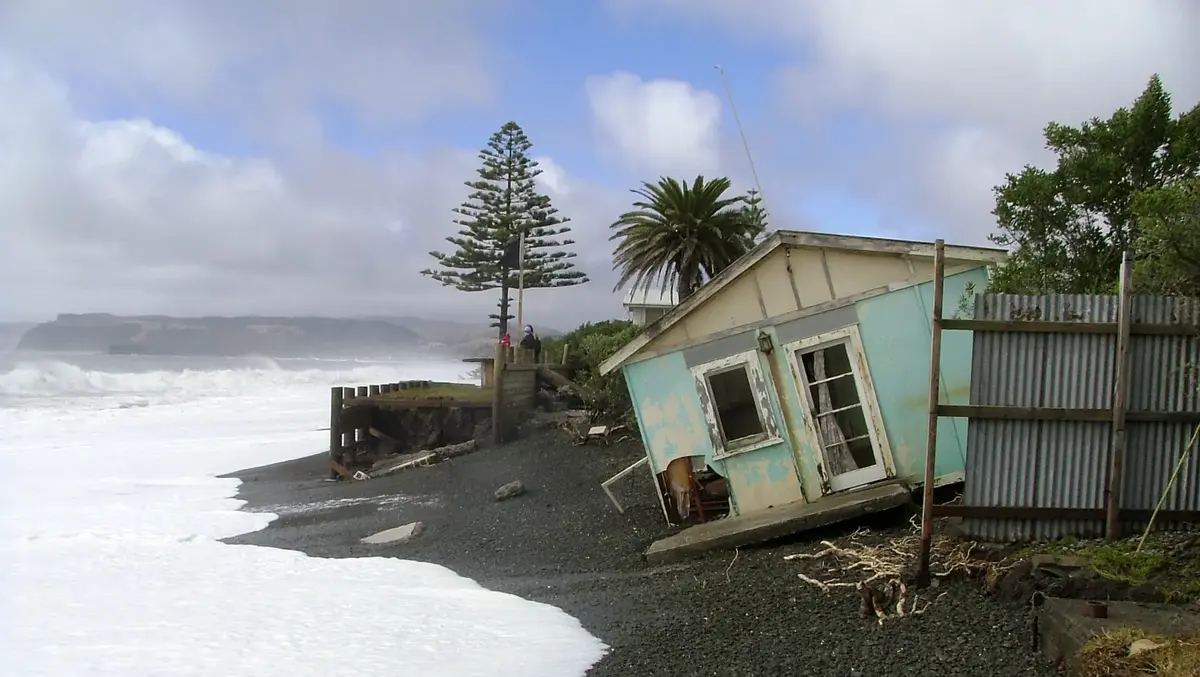
"Let's say that a customer comes to us and they're looking at a beachfront bach where there is the potential for some of that land to be eroded.
"Maybe instead of lending a million against the property, we might say, we'll lend up to $800,000 against the property, or alternatively we might say - look, we don't want to lend over 30 years, but we'll lend over 20 or 25 years."
That would only happen in very specific circumstances, she said.
"Let's say it's a little above low on the flood risk insight - that wouldn't make any difference to how we're thinking about the property, but the customer may want to do a little bit more digging just to understand what that means."
A survey the bank conducted in June found almost all respondents said a property's natural hazard risk was important to know about, but a much smaller proportion felt confident about how to find it.
Sharing the bank's own data - which was supplied by New Zealand-based environmental data company ClimSystems Powered by SLR - was one way to fill that gap, McGregor said.
A sample natural hazards report Westpac provided to RNZ showed the property's risk on four sliding scales: floods, landslides, coastal and 'surrounding area'.
The last category reflected how exposed neighbouring properties were to natural hazards, which could differ from the individual property itself, the report explained.
There would be other information available to would-be customers, including councils' own hazard data, and Westpac was happy to take that into account, McGregor said.
"Our data is showing the inherent risk of that particular property, but we don't really know if the property's had retaining walls built, had extra drainage put in, [or] other mitigating measures.
"If a customer comes to us and says, 'Hey, this property's had this work done,' then that's absolutely something we take into consideration in terms of our assessment."
Asked if she expected other banks to follow suit, she said: "I think they should."
Buying a house was often the biggest purchase a person would ever make, and Westpac wanted customers to go in "with their eyes wide open", she said.
"Being a bank, we obviously want to say yes and we want to lend, but we want to make sure that we're doing it responsibly."
Since late last year, councils have been required to include natural hazard information on land information memorandum (LIM) reports.
The incumbent government also began work on a National Flood Map, with a first iteration due early next year.
During the election campaign, insurers and local councils repeated earlier calls for the next government to hasten progress on climate adaptation.
Those impacted by floods should be 'at the core of any policy making'
West Auckland is Flooding spokesperson Lyall Carter lives in Muriwai but around two years ago had a home in Ranui until the Auckland anniversary floods led to the council buying out his property.
He said Westpac's new policy was a step in the right direction, but there were some aspects that needed more caution.
"I think referring back to our wonderful home of Ranui, we, within five years, the risk profile on that property changed dramatically from you might have a few muddy puddles at the bottom of your garden to intolerable risk."
He said people needed to get the full information to ensure residents don't find themselves suddenly with negative equity on their home.
"This is where the voice of the people who will be impacted by this needs to be at the core of any policy making."
Carter said it was encouraging to see parties across the spectrum taking steps to ensure the right information is shared widely but there needed to be more central recourses.
"It can't be a bank here with certain information about floods, and a council, local council with certain information around erosion risk.
"We need to have one hazard authority that you can go to and understand the hazard risk."
He urged the need for policy makers to have consensus and listen to those impacted by flooding along with experts in the field.
Insurance Council CEO Kris Faafoi agreed it was a good move and said positive work by minister Simon Watts was done in the National Adaptation Framework but more action was needed for long term impact.
"What we have said is it needs to be more urgent, and it needs to be more certain... we want to make sure that it's not just the government of the day that's buying into this long-term problem with a solution, it needs to be a long-term solution that all political parties can buy into."
Faafoi said in a recent poll the Insurance Council conducted saw 90 percent of people polled wanting to see politicians working together and 70 percent saying hazard management was going to be a major issue for the government.
He said reducing the risk of extreme events happening in the first place would mean insurance costs can remain accessible.
"If we can make some real progress on risk reduction at that macro level, then the ability and accessibility of that reinsurance, which is insurance for insurers, is maintained in the long term as well."