

DevforGov launches shared AR platform for councils
Fri, 27th Nov 2026 (Today)
DevforGov has launched a shared platform that lets councils and government agencies reuse and adapt digital engagement tools instead of building new ones from scratch. The platform is backed by New Zealand simulation studio Geo A.R.
Aimed at public bodies facing tighter budgets and restructures, the service offers a way to customise existing games, simulations and augmented reality experiences for local communities. It also allows organisations facing similar issues to share the cost of developing new tools.
Under the model, councils can browse existing products, apply local branding, language and information, and track use through analytics. If an organisation wants a new tool for a specific project, the platform is designed to connect it with other councils and agencies that may want to jointly fund a similar project.
Geo A.R. says the approach can cut development costs by more than 50% by reusing existing technology instead of commissioning a new product for each project.
Over more than a decade, the company has developed what it describes as serious games, turning scientific and environmental research into simulations that let users explore issues such as flooding and sea level rise. These tools put players in roles including landowners, farmers, homeowners and policymakers, allowing them to test decisions and see how different choices affect communities.
Budget pressure
The launch comes as councils in New Zealand and Australia face pressure to maintain public engagement while controlling spending. Digital tools linked to infrastructure, environmental restoration and climate adaptation projects can be costly to commission separately, particularly for smaller authorities.
Jolene Hellund, Director of Delivery and Partnerships at DevforGov and Geo A.R., said the platform was built around those constraints.
"Councils and government departments are facing real challenges around restructures and budget constraints. We need to work together to ensure innovative, educational and engagement tools continue to reach communities," Hellund said.
Geo A.R. argues these tools can help councils explain projects to residents and build support by making technical or environmental information easier to understand through play and interaction.
"We're finding really great buy-in. When we get these interactive experiences out into the community, it helps the public understand the benefit of those projects," Hellund said.
One project in development is a digital engagement tool for a stream daylighting scheme for a New Zealand council. Geo A.R. says the augmented reality experience will show residents how the area has changed over time and include a science layer explaining how actions such as riparian planting affect sediment and water quality.
At a recent school engagement day linked to a similar community trail project, about 180 students tested a demonstration AR frame and played Magical Park on the school field. They are expected to continue testing the new experience as development continues.
"We get in early in the planning, so that when these projects are being delivered, there's already a way to communicate with and engage the community," Hellund said.
Existing products
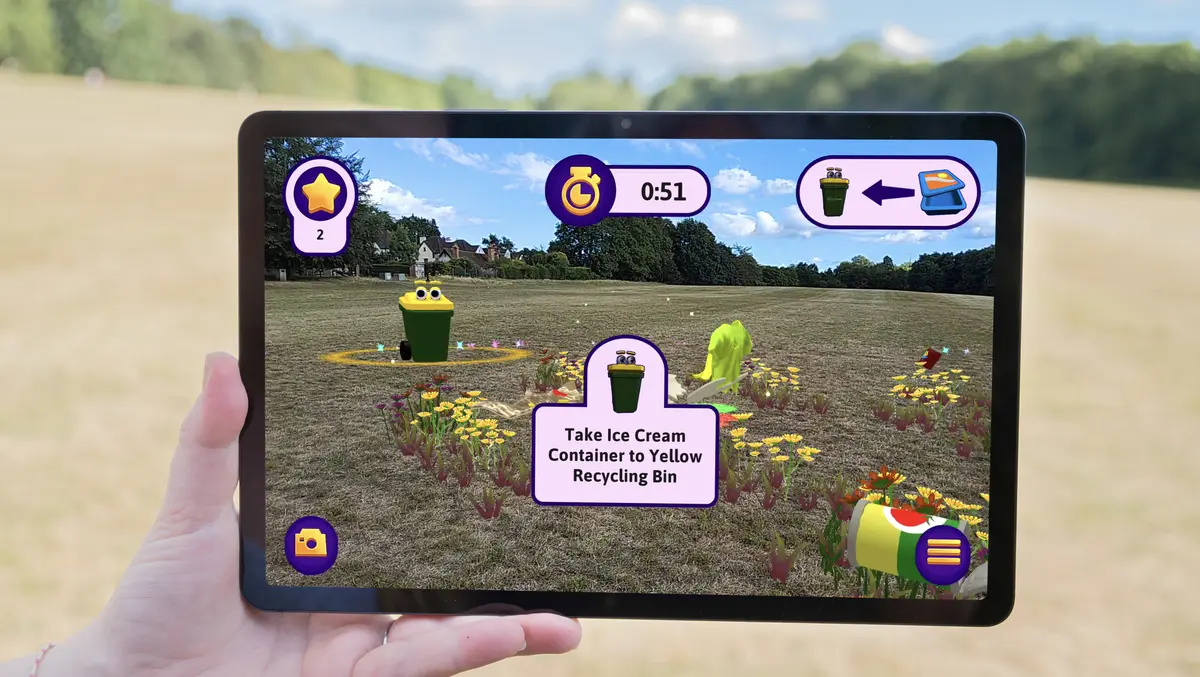
DevforGov's main existing product is Magical Park, a free-to-play augmented reality game used in public parks. It includes about 15 mini-games and has been played in more than 150 cities, according to Geo A.R.
The platform's reuse model has already been applied in Australia. When the City of Swan in Perth wanted a local waste education game, Geo A.R. adapted an existing Magical Park game world to create Waste Warriors, which teaches children how to sort rubbish into compost, recycling and general waste. The localised version was completed in about a month.
Councils using Magical Park can already manage park settings and subscriptions through a customer portal and review information on visits and engagement. Geo A.R. says this existing infrastructure supports the wider DevforGov model because councils can build on systems already in use rather than start again.
"It brings to life these incredible worlds with augmented reality and games that people can play, but there's also learning experiences and education that go with it," Hellund said.
Next phase
Geo A.R. is focusing the platform on councils across New Zealand and Australia and is seeking pilot partners among councils and government agencies. The aim is to refine products, pricing and partnership structures around what participating organisations want to fund and use.
The company is also exploring AI-assisted tools that would let councils create simpler location-based experiences themselves using maps, locations and information they already hold, alongside pre-built characters and scenes.
Hellund said personal trust would remain central even if AI reduced some production work.
"We build relationships before the work starts. That credibility and trust is something AI can't do," Hellund said.