Decarbonisation stories
High costs and storage hurdles threaten New Zealand's plans to use green hydrogen to cut emissions and build an export industry.
New recycling methods could cut EV battery costs by 60% and ease reliance on cobalt, nickel and China, researchers say.
The $30m project is expected to supply 3,000 homes and improve summer power reliability in the Far North once completed.
Companies can cut climate risk and sharpen decarbonisation budgets now by following five practical steps towards balancing emissions.
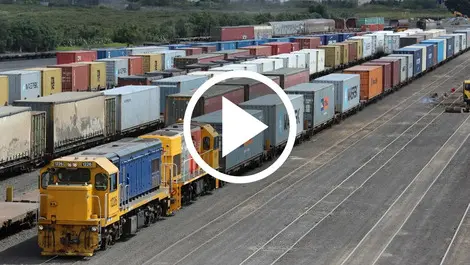
The funding will create hundreds of jobs and lift freight reliability as ageing locomotives and wagons are replaced nationwide.
Rail firms can now plan further ahead, but experts warn the fund will be stretched as electric vehicles erode its core revenue base.
Wellington has cut net emissions by 7% in 20 years despite 26% growth, as EV chargers and car share schemes reshape transport.
Establishing a carbon baseline gives firms a starting point to cut emissions, compare sites and plan against future climate targets.
Public consultation begins on a draft plan that says faster action is needed if Aotearoa is to stay within its climate targets.
Clean energy stocks may stutter in 2021 even as investment, EV sales and solar and wind capacity all hit fresh records.
Plants could stop buffering a third of human emissions within 20 years, making climate change harder to slow as warming rises.
South Australia’s push to export renewable energy will add 40,000 tonnes of ammonia a year, backed by GBP £37 million for Port Bonython.
Australia’s recovery risks being blunted unless governments shift spending towards social infrastructure, housing and renewable energy.
Weak planning, funding and governance are leaving New Zealand unable to deliver the wider public outcomes it now says it wants.
Even an ideal recycling system would cut plastics-sector emissions by only 14% by 2050, leaving major producers still far from net zero.
Sweeping planning and infrastructure reforms could speed housing and business land supply, although transport pricing still awaits progress.
New Zealand’s shift away from fossil fuels has a dedicated national hub, as Ara Ake opens to test clean energy options for wider uptake.
The site could draw USD $2 billion to USD $4 billion in logistics investment and ease freight congestion around Palmerston North.
Consumers faced an extra USD $80 million bill as the Electricity Authority found Meridian’s spilling also raised emissions and fossil fuel use.
The project will add 93 MW of capacity and offset 100,000 tonnes of CO2 a year as MainPower begins site works near Waipara.