Flush with potential: Shifting wastewater from sea to soil
Wed, 2nd Sep 2026 (Today)
Using treated wastewater for irrigation might become more common in Nelson Tasman as the two councils seek to minimise discharging to the ocean.
Treated wastewater was already used to irrigate a local golf course, but it could also help grow crop fields in the future.
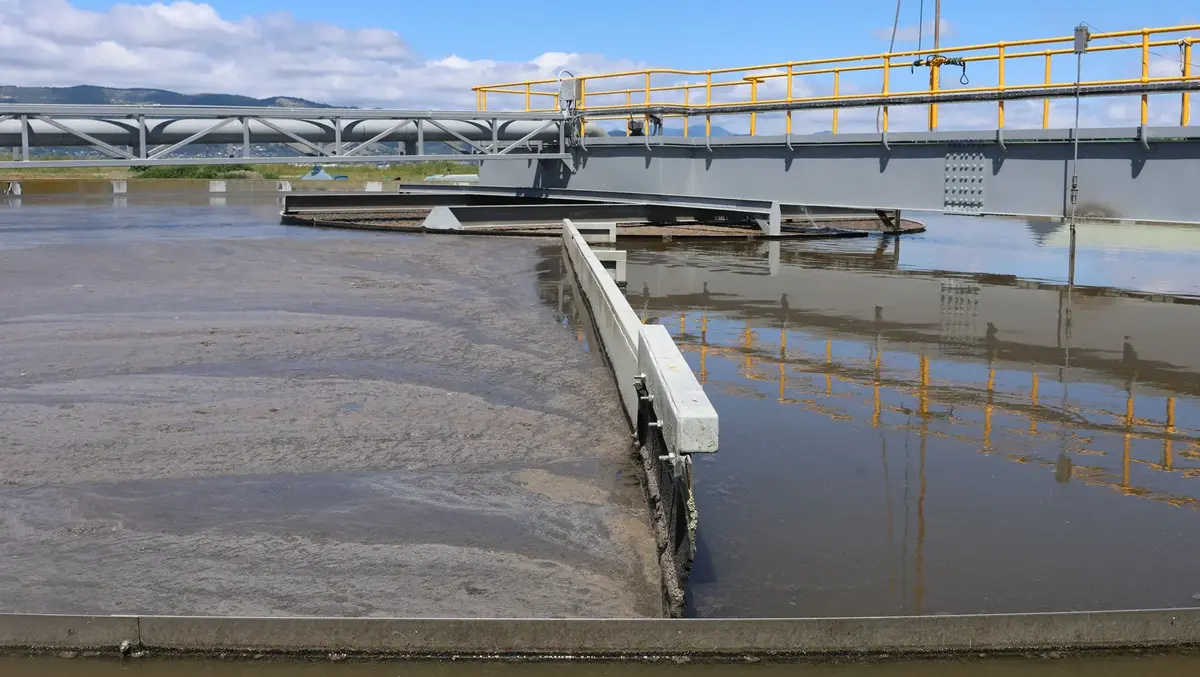
The Bell Island Wastewater Treatment Plant serves Stoke and Tāhunanui in Nelson and Tasman communities from Wakefield to Māpua.
Currently, the facility discharges most of its treated wastewater on an outgoing tide, but plans are being explored to make better use of the water.
Tasman councillor Kit Maling chairs the joint committee that has oversight of the Nelson Regional Sewerage Business Unit (NRSBU), which manages the plant.
"We will be putting more wastewater to land in time," he said.
The NRSBU was working through the consenting process to irrigate two pieces of land on Bell and Best Islands with treated wastewater, which was hoped to commence within the next two years.
The intention was that the irrigation would be used to grow crops which could then be turned into baleage.
"Long-term, that's what we want to do… The advantage is we can reduce the amount of water we send to the sea, so it will help us with our relationship with iwi going forward."
Maling said iwi have previously objected to the discharge of the treated wastewater into the sea, and with the wastewater treatment plant needing another resource consent in the future, reducing the amount of water discharged would be positive.
He added that the wastewater was "highly treated" and would not cause any odour.
Treated wastewater was already used to irrigate the Greenacres Golf Club on Best Island.
Head greenkeeper Richard Sherlock said the club had been known to some as "Brownacres" as previously it did not have a resilient water supply large enough to reliably irrigate the club's land through the summer.
Now, with a large, secure supply, the course was able to stay green.
"The golf course itself is in far better condition year-round than ever," Sherlock said.
"Not only are the fairways watered, they are getting a microdose of trace nutrients each night… that's a good thing."
The treated wastewater was tested regularly but had always come back clean, and there had never been any odour issues.
In addition to improving the club's reputation and members' enjoyment, Sherlock added that the environmental benefits of the arrangement could be "massive" if it was scaled up.
A significant increase was unlikely in the immediate future, however.
Discussions were ongoing about the feasibility of using the water to irrigate the Saxton Field sportsground complex.
But during August's meeting of the Joint Saxton Field Committee, Maling warned that such a measure could cost around $6.8 million and so was not slated to be funded in the immediate future.
"They want to do it, because it will help with the consent, which is a very important issue going forward… but it's still a $6.8 million cost."
He was also interested in selling the water to industrial users in the area who currently used drinking water for their operations; however, the advice from council staff was that "it's not as easy as we would like".
General manager regional services Nathan Clarke was in charge of the wastewater treatment plant.
"There are many benefits to water reuse, which include reduced operating costs and lower demand for water storage," he said.
"Additionally, the practice has resulted in more disposal capacity for the wastewater system without the need to increase discharge into the estuary."
He told the May meeting of the Joint Regional Sewerage Committee that the cropping proposal intended to export nutrients from the site.
"We're trying to reuse water to create benefits, and we're trying to do it at the least… cost we can, and this is one of the ways of doing that."
At this stage, Clarke could not confirm whether a cropping operation would increase costs or generate a profit, as it would be dependent on wider demand.
"During periods where feed was in short supply it'll be profitable, but in other periods it might be that it only just covers its cost."
Using treated wastewater to treat crops was already practised in other places, like Taupō and Rolleston, and Maling highlighted that Tasman had many dairy farms that could benefit.
"Our entire philosophy with biosolids and with water is to try to create demand slowly and then build incrementally to meet that demand," Clarke said.
In 2025, the NRSBU reused 68,500 cubic metres of treated water across the summer months as irrigation at Greenacres and Bell Island, with another 15,200 cubic metres used within the treatment plant itself.
Biosolids from the treatment plant are already used as fertiliser to increase the growth rate of pines on plantations on the nearby Moturoa/Rabbit Island.