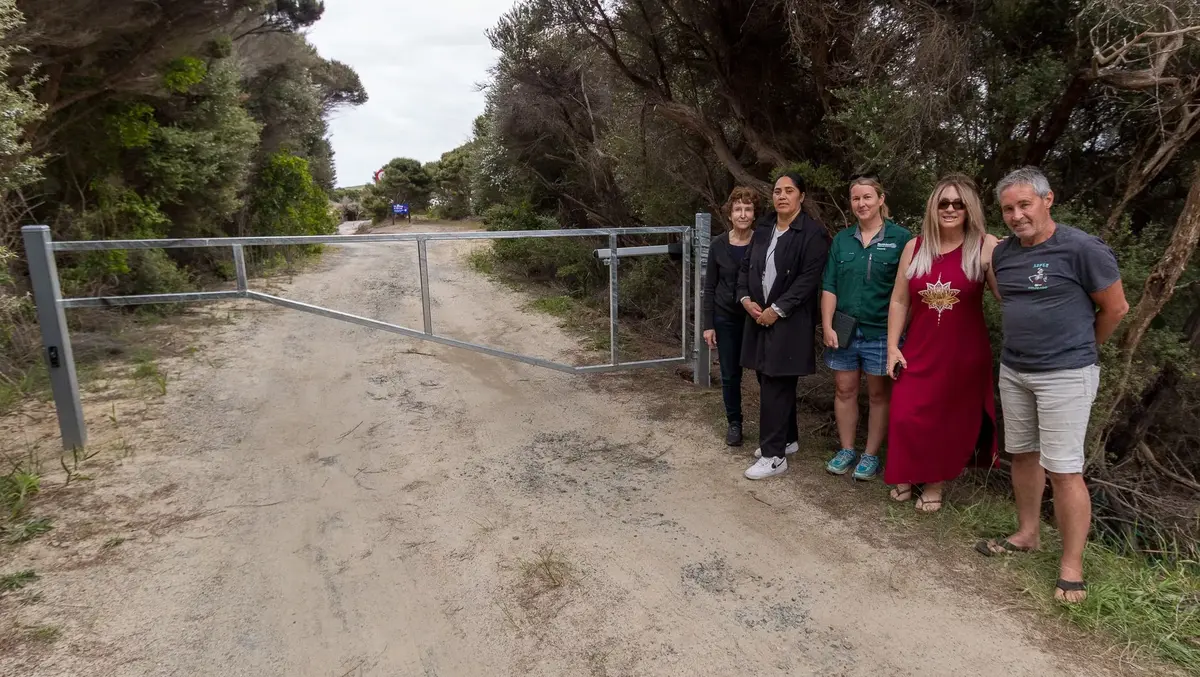
Boaties face new biosecurity gate at popular Northland lake
Fri, 23rd Oct 2026 (Today)
Boaties heading to Northland's Kai Iwi Lakes will encounter a new automated biosecurity gate at Lake Taharoa boat ramp this Labour Weekend as authorities ramp up efforts to protect against the invasive freshwater clam.
The Kai Iwi Lakes attract about 20,000 visitors a year, with daily numbers reaching as high as 2000 during the peak summer season. Widely regarded as one of Northland's premier visitor destinations, they draw boaties, campers and holidaymakers from around New Zealand.
Vessel users wanting to launch at Kaipara's Lake Taharoa will need to complete an online self-certification process and obtain a PIN to open the automated gate and access the boat ramp from today (SUBS: Friday October 23).
Under the new Lake Taharoa system, boaties are encouraged to complete the self-certification process at least 48 hours before travelling to the lake.
The new biosecurity move comes as Northland Regional Council (NRC) and others intensify efforts to protect the region from the invasive freshwater clam.
The fast-spreading pest has yet to establish in Tai Tokerau but has sparked growing concern around New Zealand because of its ability to spread between waterways and damage infrastructure.
The biosecurity gate will also help prevent the spread of other invasive freshwater pests.
General public access to Lake Taharoa, one of the three lakes that make up the Kai Iwi Lakes group, remains open.
NRC Kaipara constituency councillor John Blackwell said the new gate was designed to help protect one of Northland's most treasured freshwater recreation destinations while keeping it open to the public.
"Stopping pests from arriving is far easier and more cost-effective than trying to manage them once they're established," Blackwell said.
The lakes are nationally significant for both recreation and for supporting rare native freshwater plant communities found in their exceptionally clear dune-lake environment.
Lake Taharoa is the largest and deepest of the three Kai Iwi Lakes. Covering roughly the area of 300 rugby fields, it reaches depths of almost 40m. It is New Zealand's largest dune lake and is regarded as one of the largest and deepest dune lakes of its type in the world.
NRC has invested about $53,000 in the automated gate and will also cover its ongoing operating costs.
The invasive freshwater clam was first detected in New Zealand in 2023 in the Waikato River and has since triggered biosecurity responses elsewhere in the country, including in the Rotorua lakes area, Taranaki and Auckland, as authorities work to prevent its spread to new waterways.
Authorities have repeatedly warned that once established the pest is extremely difficult to eradicate and can reach very high densities, threatening native ecosystems and causing problems for water infrastructure.
Blackwell, a farmer, said the threat extended beyond lakes and rivers.
"For instance, this clam can affect farm water reticulation, block ballcocks and water lines and potentially threaten the viability of the farm itself."
The project has been developed in partnership with Kaipara District Council, Te Roroa, Te Kuihi hapū, the Department of Conservation and the Taharoa Domain Working Group.
Blackwell said the gate reinforced the "check, clean, dry" message aimed at preventing aquatic pests being transported between waterways on boats, trailers and equipment.
The approach mirrors biosecurity measures introduced elsewhere in the country after invasive freshwater clam discoveries prompted restrictions on lake users and increased surveillance of waterways.
"Essentially, we are trying to balance public access with environmental protection," Blackwell said.
The gate is the latest line of defence in efforts to keep the invasive freshwater clam out of Northland before the busy summer boating season gets underway.
The Kai Iwi Lakes are a group of three freshwater dune lakes on Northland's west coast, about 35km northwest of Dargaville. Managed as part of the Taharoa Domain, the area is popular for swimming, kayaking, boating, water-skiing, camping and walking.
Dune lakes form when sand dunes dam low-lying areas, creating freshwater lakes fed mainly by rainwater and groundwater rather than rivers. This gives them their characteristic clear, blue water.
They are relatively rare in New Zealand and considered among the world's rarest aquatic habitats.