A 31-year old worker was crushed to death while helping move a 1.84-tonne press brake which could not be shifted by a forklift. Moving skates, a stacker, and a farm jack were used. One of the skates caught in a crack on the concrete floor, causing the machine to fall and kill the worker.
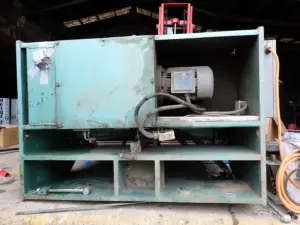
The press brake involved in the incident
Manufacturing is one of New Zealand’s most dangerous sectors, and a a strategic focus for WorkSafe. It is reminding small businesses to plan high-risk, ad-hoc work, after a man was crushed to death while moving heavy machinery on the job.
WorkSafe says the tragedy highlights a risk seen too often in small workplaces: jobs that fall outside day-to-day routines are tackled without enough planning, the right equipment or clear safety controls.
Mitchell Pool was part of a team moving a 1.84-tonne press brake into a workshop at Peter Gray Engineering in Ōtorohanga in December 2023.
The business, which carries out engineering and fabrication for the dairy sector, has recently been sentenced for its work health and safety failures.
The work area had not been fully prepared for the move, which meant the press brake could not be shifted by a forklift. Instead, moving skates, a stacker and a farm jack were used.
During the move, one of the skates caught in a crack in the concrete floor, causing the machine to become unstable, fall and fatally crush 31-year-old Mr Pool.
WorkSafe’s investigation found the job was poorly planned, with no task-specific risk assessment, unclear load limits, unsuitable equipment, and workers exposed to crush risks.
“Small businesses often rely on experience and problem-solving on the job. But when heavy machinery is involved, improvising can have fatal consequences,” says WorkSafe’s central regional manager, Nigel Formosa.
“Experience does not replace planning. Even skilled workers can be put at serious risk if the job hasn’t been properly thought through.”
“This case shows why small businesses need to treat non-routine work as high risk. Know the load, use equipment that’s fit for purpose, set the job up so safer methods can be used, stop and reassess when things change, and keep people well clear of crush zones,” says Formosa.
The company was sentenced in February 2026 in Te Kuiti District Court and ordered to pay reparations of $140,000.04 and fined $9,000. The company was charged under sections 36(1)(a) and 48(1) and (2)(c) of the Health and Safety at Work Act 2015.
“Being a PCBU having a duty to ensure, so far as is reasonably practicable, the health and safety of workers who work for the PCBU, including Mitchell Robert Thomas Pool, while at work in the business or undertaking, namely moving a press brake into a workshop, did fail to comply with that duty, and that failure exposed the workers to a risk of death or serious injury arising from manually handling heavy plant.”