Load balancing stories
F5 has revamped its Application Delivery Controllers to tackle the challenges posed by AI-driven applications, highlighting a critical shift in security and delivery.
F5 has unveiled its AI Gateway, a solution aimed at streamlining the secure deployment of AI applications amid growing security challenges.
F5 releases NGINX One software to enhance application security and delivery for diverse enterprise teams, integrating load balancing, security, and AI-driven insights.
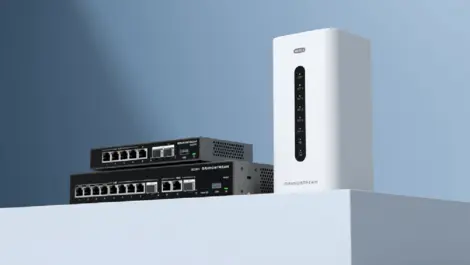
Grandstream expands its GCC6000 Series with the new GCC6010W and GCC6011, offering unified communication, networking, and security solutions for SMEs.
Kaspersky's latest SIEM update enhances threat detection with advanced features like multi-cluster search, DNS Analytics, and MITRE ATT&CK mapping.
Virtualising networking infrastructure is key to sustainability as companies strive to reduce IT carbon emissions. Here's how to optimise network efficiency.
Progress has rolled out new AI-enhanced features for its LoadMaster 360 platform, enabling organisations to bolster web app security and performance against advanced cyberattacks.
HAProxy Technologies acclaimed leader in 18 categories in G2 Summer 2024 Grid Reports, highlighting advancements in load balancing, security, and automation.
Portkey.ai and F5 collaborate to revolutionise the delivery and management of secure artificial intelligence applications.
Cybersecurity provider, Radware, expands its security services portfolio with the launch of Load Balancer as a Service and an enhanced Cloud Network Analytics Service.
As more businesses seek cloud-like features with regulatory compliance and security, colocation facilities have proven essential.
Industry veteran Tim Bertrand steps up as the new President of HAProxy Technologies, the world's leading software load balancer, set to accelerate its growth trajectory amidst significant revenue rise.
Chicago-based Tetrate has launched a tech preview for its new product, Tetrate Envoy Gateway, at the KubeCon NA conference.
Kong predicts that in 2022, enterprises will phase out legacy load balancers and adopt decentralised client-side load balancing with ZeroLB.
ZeroLB is described as a load balancing pattern that aims to remove every load balancer that is being deployed in front of individual services and applications.
In a multi-cloud environment, where multiple toolsets are offered, achieving visibility on emerging and active issues across all platforms is a major challenge.
The goal is to provide increased value and tighter alignment with independent software vendor (ISV) and service provider use cases.
As network traffic surges and app quality drives tech decisions, Kemp explores the rise of next-gen SDN solutions, marked by automation and programmability.
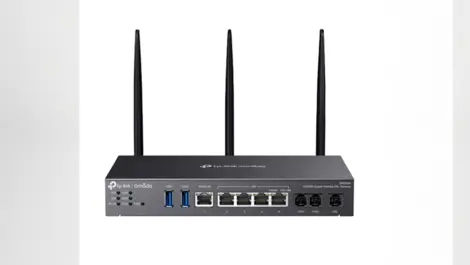
TP-Link has launched its first DSL Gateway, the Omada DR3650v, designed to improve networking for small to medium-sized businesses.
Kemp has signed a deal with Bluechip Infotech, ending its partnership with Sapply, to bolster its load balancer and AX portfolio in Australia.