WorkSafe New Zealand has issued a new four-year Statement of Intent 2025-2029, in part reflecting a government directive that will significantly refocus the crown agency from prosecution to support. Inexplicably, there is no reference in the plan to a directive from the Minister to involve local associations and companies in the process, says publisher Mike Bishara.
The release of the plan follows a year of change for WorkSafe following a MBIE consultancy roadshow in which WorkSafe’s “inconsistency, culture and lack of guidance was a constant theme,” according to the Minister.
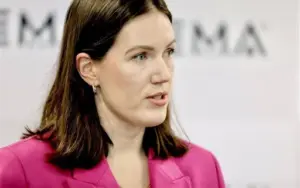
Workplace Relations and Safety Minister Brooke van Velden — culture where the regulator is feared not conducive to positive outcomes in the workplace
Van Velden quickly initiated a progamme with fresh faces and a vow to switch the under-staffed and under-resourced WorkSafe mantra from enforcement to early intervention — to support businesses, especially SME, to manage their critical risks.
“Compliance by a business with an Approved Code of Practice (ACOP) will be sufficient to meet that business’s health and safety obligations,” she said.
“A culture where the regulator is feared for its punitive actions rather than appreciated for its ability to provide clear and consistent guidance is not conducive to positive outcomes in the workplace
“ACOPs will create a safe harbour from other H&S (Health and Safety) regulations. An ACOP will typically cover a sector or an industry.
“They can now be created only by WorkSafe but the Government will extend this ability to private sector organisations, although the Minister will need to approve each ACOP against a set of prescribed standards,” according to van Velden.
Industrial Safety News knows of one association which has submitted multiple applications over a year and has yet to receive an acknowledgement, let alone a reply.
The new teams
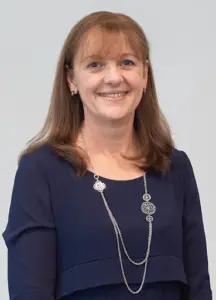
Chief executive Sharon Thompson – the role is to make it easier to understand what’s required and act on it
A new WorkSafe Chief Executive, Sharon Thompson, was appointed in October 2024 and four new members were introduced progressively to the seven-strong Leadership team .
A year later it was the turn of the WorkSafe Board Murray Jagger was appointed board chair and Chris Alderson, Chief Executive of CHASNZ, tapped to offer a worker perspective, health and safety expertise and strong construction networks. Brett O’Riley, former CEO of the Employers and Manufacturers Association made up the trio of new faces on the board.
The Statement of Intent 2025–2029 was produced by then Acting CE, Bill Hanson, WorkSafe’s deputy chair. It puts priority on “educating and engaging businesses in the spotlight, whilst delivering proportionate enforcement when needed. with particular focus on the high-risk sectors of agriculture, construction, forestry, and manufacturing.
There will be clearer guidance and support – practical information tailored to real-world conditions and targeted engagement – proactive partnerships and sector-led initiatives in high-risk industries.
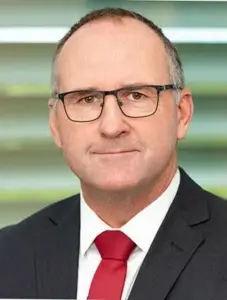
WorkSafe Board chair Murray Jagger — knowledge of high-risk operations and governance from primary and port sector background.
There will be proportionate enforcement – fair, consistent action when obligations aren’t met, with greater use of enforceable undertakings as alternatives to prosecution.
We’re investing in digital technology and data insights to make compliance simpler and more efficient, the report says
“New Zealand’s economy is unique says the report, with a strong foundation
of small- and medium-sized businesses. To reduce harm and support safer work, we’re aligning ourselves to better serve and support these enterprises – meeting them where they
are and helping them succeed.
“Healthy and safe work environments are better for business, people and the communities they operate in. This Statement of Intent sets out the purpose and direction of our transformation, why it matters and what it means for the way we work.
“We will be working in partnership with businesses and workers to make it simple and clear what they need to be doing. “Our support for those who are creating healthy and safe environments will also be demonstrated by targeting critical risks.
The Minister says the reset will “reduce unnecessary costs for businesses, especially small businesses, improve outcomes for businesses and workers and increase business certainty about what to do to comply.”
The objectives will be achieved through a range of legislative, operational and regulatory changes, the first phase of which is to sharpen the purpose of the Health and Safety at Work Act to manage critical risks and clarify the boundaries of the Act.
“The second phase is to make legislative and operational improvements to increase businesses certainty and public confidence in WorkSafe and the third phase is to work on a regulatory relief package to address sector-specific pain points.”
The Minister says the changes will include a “carve-out” for small, low-risk businesses from the Act’s requirements with the effect that they “will only have to manage critical risks and provide basic facilities to ensure worker welfare”.
The example the Minister supplied for what this might look like “in action” was that a small clothing shop would “still need to provide first aid, emergency plans and basic facilities such as suitable lighting, but wouldn’t need to have a psychosocial harm policy in place.
The Government will legislate to specify that day-to-day health and safety management will be the responsibility of managers, leaving directors free to focus on governance and strategic oversight, according to a report from ChapmanTripp in April last year.
The Statement of Intent outlines significant investment in inspector training and capability to ensure businesses experience consistent, constructive engagement across the country.
Businesses can expect more upfront guidance so they feel confident making decisions relating to health and safety. We’re building trust and consistency while making interactions faster and easier through digital tools and better feedback systems, it declares.
“Our vision is simple: everyone who goes to work should come home healthy and safe. Most businesses want to do the right thing, and for them our role is to make it easier to understand what’s required and act on it,” says Thompson.
WorkSafe’s view of itself and its role
WorkSafe exists to influence businesses and workers to meet their responsibilities to ensure work is healthy and safe. We are redefining how we go about these functions.
WorkSafe is a critical part of that system, which relies on people getting on board and involved, and leadership and accountability from business, workers and government agencies.
We are charting a new path to become a different kind of regulator – one that acknowledges that most businesses and workers want to do the right thing and offers them the support they need to do it. To do this, we are transforming our strategic approach.
Our people are focused on building WorkSafe into a trusted, credible regulator that empowers businesses and workers to keep people safe at work.
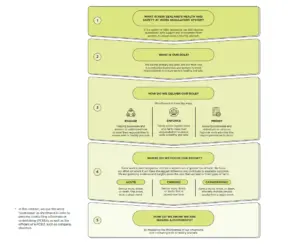
The consequences of not taking the right health and safety actions are high and very real. We will influence businesses and workers to get it right from the start.
Our functions include providing guidance, information, codes of practice and safe work instruments. We monitor and enforce compliance – including through the authorisation of third parties.
Under our health and safety system in New Zealand, businesses and workers have the primary legal duty – as far as is reasonably practicable – to make sure workers are healthy and safe.
They are not on their own. The wider health and safety system has a collective responsibility for health and safety at work.